

European Sustainable Development Week 2026
- 09/24/2026
European Sustainable Development Week (ESDW) is an annual highlight dedicated to raising awareness and mobilizing action around sustainable development issues.
At the heart of the 2030 Agenda, the 17 Sustainable Development Goals (SDGs) serve as a shared roadmap for addressing the major social, environmental, and economic challenges facing our societies. Climate, biodiversity, energy, access to water, poverty reduction, gender equality, education, agriculture, economic prosperity, and peace: the SDGs cover a wide range of issues and concern all countries.
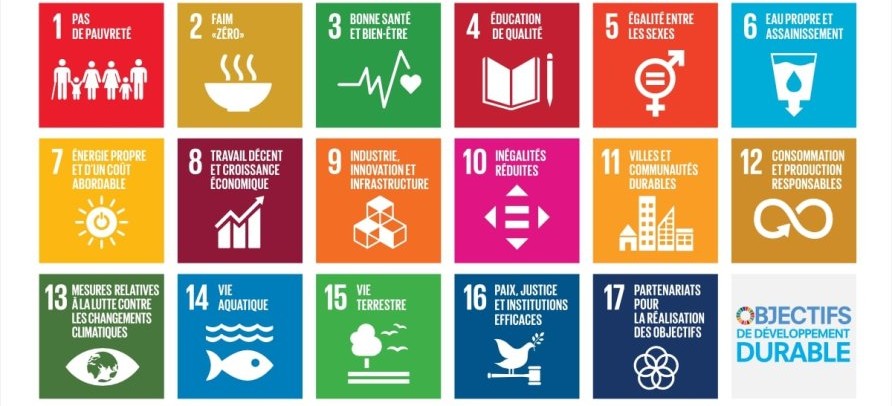
Through these objectives, everyone can help advance sustainable development by supporting and implementing concrete, local, and diverse initiatives. These actions, each on their own scale, contribute to a collective momentum of commitment and transformation.
As a leader committed to innovation and sustainable development, Erganeo supports technologies and projects that address the major societal and environmental challenges of our time. On the occasion of this year’s World Sustainable Development Week, we would like to highlight several technologies supported by Erganeo that are directly linked to the SDGs, including :

- CO-MBACT-AGE - This technology uses a compound that releases carbon monoxide (CO-RM) to rebalance the gut microbiota and thereby prevent or treat diseases associated with dysbiosis, such as obesity, diabetes, and inflammatory disorders. Plus de détails
- Treatment of HER2-positive cancer - This technology offers an anti-miRNA that targets miR-429 to overcome resistance to HER2 therapies and provide personalized treatment for HER2-positive breast cancer and cancers of other origins. Plus de détails
- EV-MIME - This technology uses extracellular vesicles enriched with NFAT3 and miRNAs to inhibit tumor invasion, with potential as an adjuvant or neoadjuvant treatment for triple-negative breast cancer and pancreatic cancer. Plus de détails
- RELB - The RelB signature identifies a new subgroup of patients with LDGCB associated with a poor prognosis, improving stratification and paving the way for targeted therapies. Plus de détails
- Cell-free antigen production—Produces Rh antigens in vitro in their native conformation using nanodisks, offering a new diagnostic approach for the detection of alloantibodies in blood transfusion and pregnancy monitoring. Plus de détails
- PLT Dx - These biomarkers can predict the risk of preterm birth with a high degree of accuracy and pave the way for a rapid, reliable test that can be used at the point of care. Plus de détails
- Nano-rheological biomarkers - This technology enables the measurement of stiffness at the single-cell level, as well as the mechanical and morphological heterogeneity of the cell population, a key determinant of the severity of erythrocyte disorders. Plus de détails
- Targeting DNA Repair Enzymes for Gliomas - This technology is based on targeting the PNKP enzyme, which is involved in DNA repair, in order to specifically block the proliferation of pediatric glioma cells carrying H3.3 mutations. Plus de détails

- Sequencia - This startup targets the education sector by offering a SaaS platform for analyzing, sequencing, and indexing videos.
- INOVISUP - This software detects chart elements (bars, axes, ticks, labels, legends, titles, segments, symbols, and borders) from images and makes the content searchable via a voice and/or text-based assistant. It is compatible with standard screen readers. Plus de détails

- ANODOX-BIO - This reactor non-selectively oxidizes biorecalcitrant organic compounds present in industrial wastewater. It converts them into more biodegradable forms and improves the efficiency of wastewater treatment while optimizing energy consumption. This technology achieves high removal efficiencies for a wide range of industrial wastewater streams. Plus de détails
- Water and Air Pollution Control in Civil Engineering - The invention proposes a method for the direct growth of ZnO nanowires on civil engineering materials in order to effectively purify air and water by breaking down toxic organic compounds into harmless products upon contact with these materials through photocatalysis. Plus de détails

- Active Photovoltaic Compensator for Buildings - A smart microgrid solution optimizes renewable energy production while reducing power disturbances in a reliable, environmentally friendly, and cost-effective manner. Plus de détails
- BattOrga - Enables the production of a new type of binder-free organic battery that, in addition to eliminating lithium and providing flexibility to the system, improves energy storage performance by offering hybrid operation between a battery and a supercapacitor. Plus de détails
- Flexer - While conventional heat exchangers use metal as their base material, this new heat exchanger is built around a flexible polymer structure. A true technological innovation, this system can be easily integrated into an existing piping network and offers numerous advantages, such as corrosion resistance, reduced fouling, modularity, and low capital costs. Plus de détails

- Cathode catalyst - This innovation significantly improves the efficiency of AEM water electrolysis, rivaling platinum while reducing hydrogen production costs. Plus de détails
- Raw Earth Material - This technology stabilizes excavated soil using biopolymers to produce strong, durable raw earth blocks, offering an eco-friendly and locally sourced alternative to traditional building materials. Plus de détails
- Humidification and Drying Cycle Simulator - An innovative, programmable device designed to replicate the conditions of the automatic humidification and drying cycle in situ, suitable for civil engineering materials and soil samples.
Plus de détails
- Diagnosis of Power Electronics Devices - A new, simple, and cost-effective method, based on a temperature-independent aging indicator, enables real-time monitoring of the health of power components and significantly reduces maintenance costs. Plus de détails

- ANODOX-BIO - This reactor non-selectively oxidizes biorecalcitrant organic compounds present in industrial wastewater. It converts them into more biodegradable forms and improves the efficiency of wastewater treatment while optimizing energy consumption. This technology achieves high removal efficiencies for a wide range of industrial wastewater streams. Plus de détails
- Energy-Efficient Smart Windows - This dual-function smart window technology reduces the energy footprint of buildings through reversible zinc electrodeposition and electrochromic materials. Plus de détails

- Rechargeable Battery - An innovative process for developing rechargeable battery materials based on zinc and manganese. This industrially scalable process is a one-step procedure and is energy-efficient. Furthermore, the use of these widely available materials makes it possible to design safe and environmentally friendly batteries.

- In-situ electrochemical process - The goal of electrochemical regeneration is to restore the adsorption capacity of the adsorbent material and to degrade organic pollutants. The technology was initially developed using activated carbon fibers, a revolutionary material that enables faster adsorption of organic pollutants. It is also applied to the regeneration of conventional activated carbon granules. Plus de détails