Erganeo is at your disposal.

“StrApMat” is designed around neuroscience principles of effective learning, applied to the academic domain of mathematics. It supports equal opportunities for progress in mathematical learning by leveraging neurocognitive mechanisms of reward processing and emotion regulation.
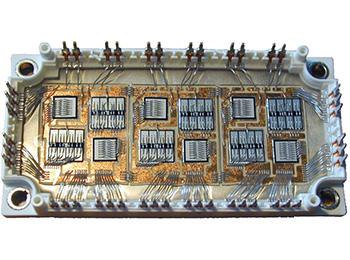
Current methods for monitoring the health status of power semiconductor components, in real time, in operating electronic equipment, are very complex and therefore expensive to implement. Thanks to the discovery of a new unique temperature-independent aging indicator it has now become very simple and economical to diagnose the state of health of these components. The result is a drastic reduction in the cost of maintenance that opens the way to new fields of application previously unthinkable.

Pediatric high-grade gliomas are particularly aggressive brain tumors with a very poor prognosis. In these tumors, which are often mutated for the H3.3 variant of histone H3, a defect in a PNKP-dependent DNA repair mechanism has been identified. The resulting genomic instability may promote the transformation of cancer cells. The inventors have shown that inhibition of PNKP gene expression specifically prevents the proliferation of glioma tumor cells carrying the H3 oncohistone mutations. These promising results pave the way for targeting PNKP as a novel therapeutic strategy.
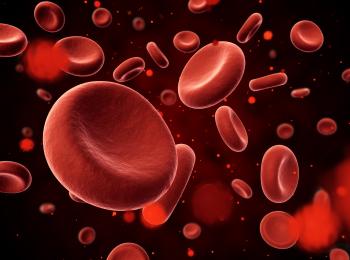
Erythrocyte disorders such as sickle cell disease and hereditary spherocytosis represent a growing public health challenge due to the increasing diversity of the French population. Ektacytometry, the reference technique for measuring erythrocyte deformability, has intrinsic technical limitations: it measures the average deformability of red blood cell populations without capturing cellular heterogeneity, and its cost remains high. To overcome these challenges, the inventors have developed a method based on molecular rotors whose fluorescence emission is correlated to red blood cell rigidity. This technology can quantify both single-cell rheology and the mechanical heterogeneity within cell populations, a key parameter in determining the severity of erythrocyte disorders. This innovative approach aims to improve the diagnosis of membrane disorders pathologies and the prognosis of both sickle cell-anemia and spherocytosis.
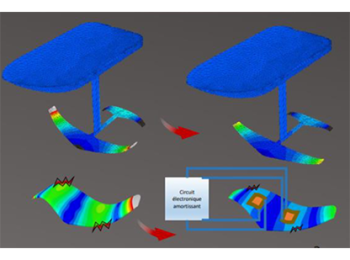
A method for manufacturing aerodynamic or hydrodynamic structures made of composite materials, enabling the incorporation of a piezoelectric sensor or actuator within the structure without affecting the external geometry.
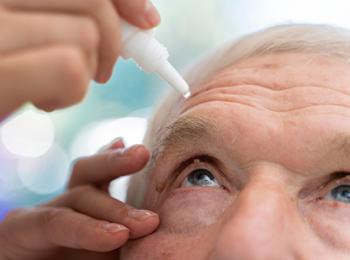
Current treatment of glaucoma contain preservative or non-particular surfactant that display deleterious effects (allergy, inflammation). To address this issue the inventors propose a novel ophthalmic composition, comprising a nonionic oil-in-water emulsion (Pickering emulsion), and stabilized with organic nanoparticles. Those innovative ophthalmic compositions could encapsulate active principles with poor solubility in water (steroïds and prostaglandins) and could ensure an ocular extended-release. These compositions are useful as a drug, in particular for ocular instillation of drugs involved in treatments of inflammation and glaucoma.
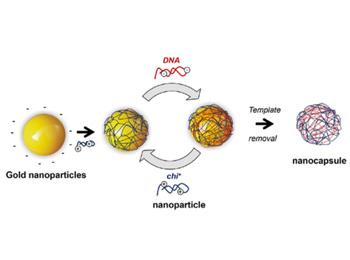
Idiopathic Nephrotic Syndrome (INS) accounts for 85% of glomerular nephropathies in children and 25-30% of those in adults. Pathogenesis of this syndrome is based on an immune disorder whose mechanism remains incompletely understood. The team has identified a promising protein target to develop gene therapy for INS. However, no simple technique compatible with a gene therapy treatment has shown efficiency to target the podocyte so far. Vectors classically used in gene therapy (adenovirus, retrovirus, etc.) do not allow for proper targeting of the podocyte due to the presence of a glomerular barrier. Thus, the inventors have developed nanocapsules consisting of multilayers of chitosan/DNA assembly as a vector carrier allowing specific expression of miRNA in podocytes. This therapeutic approach has been validated in vitro and optimized for in vivo use, making it possible to envisage new therapeutic perspectives for INS in humans. This new innovative expression nanocapsule can be optimized for other therapeutic uses.
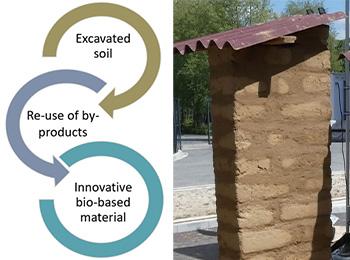
Reducing the environmental footprint of building materials is a major challenge in the construction industry. This innovative process makes it possible to reinforce a wide range of excavated soils by making them suitable for raw earth construction. Compressed earth blocks possessing enhanced mechanical properties and water resistance are fabricated with addition of biopolymers. These clay materials, 100% geo-based and bio-based, are an ideal solution for building the city of tomorrow.
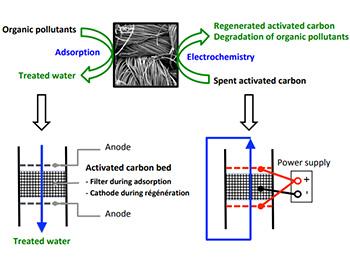
The development of efficient water filtration systems is an important challenge for environmental engineering. Activated carbon is widely used for the adsorption of organic pollutants, such as pesticides, pharmaceutical by-products and volatile organic compounds. However, it is only a separation step and the regeneration processes of the adsorption material currently present some important drawbacks. A new electrochemical process for in-situ regeneration of activated carbon has been developed. Both adsorption and regeneration steps are performed in the same reactor. The objective of electrochemical regeneration is to recover the adsorption capacity of the adsorption material and to degrade organic pollutants. The technology was initially developed using activated carbon fibers, a breakthrough material allowing faster adsorption of organic pollutants. The technology is also applied for the regeneration of conventional activated carbon grains.
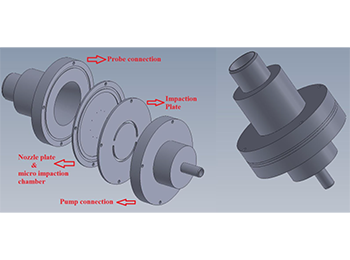
The invention is an instrument measuring the concentration of fine particles in the air. It consists of an aerodynamic stage screening device directing aerosol particles according to their mass to microbalances. The choice of this instrumentation is in accordance with the standard procedures used in the field of aerosol measurement to evaluate indoor air quality. The desire to target aerosols of biological origin such as microfungi is linked to health issues, as these microbes cause allergies. Real-time and continuous monitoring of the presence of particulate matter in the air will allow more accurate analysis of outdoor and indoor air quality.
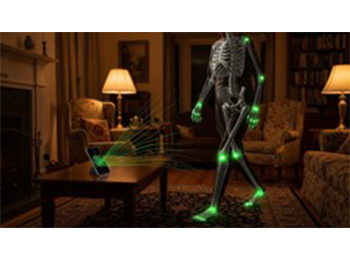
Current fall detection solutions for the elderly persons (necklaces, watches) have a rate of false alarms that is too high. The radar system developed by the ETIS laboratory allows for continuous and non-intrusive monitoring, with detection of gait deterioration and prevention of fall risks.
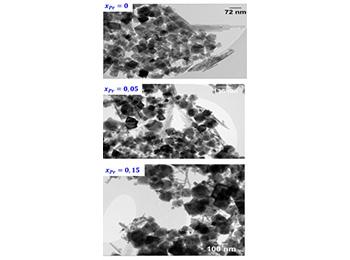
There are a multitude of methods for producing magnetic nanoparticles with a given magnetic behavior (paramagnetic, ferromagnetic, etc.) and a given magnetic category (soft, semi-hard, hard). But for the same composition of precursors and a given process, there is still no simple and effective way to modulate the magnetic category. Based on coprecipitation of precursors and a hydrothermal and/or solvothermal synthesis, this innovative production process allows to easily choose the magnetic category (soft, semi-hard, hard) of the nanocomposites while using the same composition of precursors.
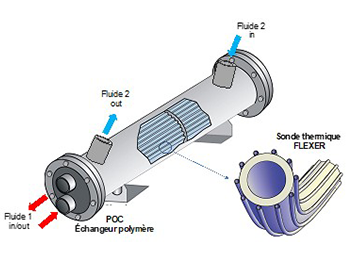
New heat exchanger based on low cost material, easy to install and maintain. It is based on a flexible polymer tructure and left free in a moving external fluid.

Wind turbines are used more and more to participate in the energy transition of countries. However, their operating range is limited depending on windy conditions, which could jeopardize the viability of certain projects.
The technology developed makes it possible to respond to this problem. The researchers have developed a process that allows, depending on the wind turbine installation conditions, to select the most suitable material. The latter will deform according to the chord under the force of the wind and the centrifugal force to optimize the efficiency and the operating range of the wind turbine, while ensuring its proper functioning in the face of strong winds.
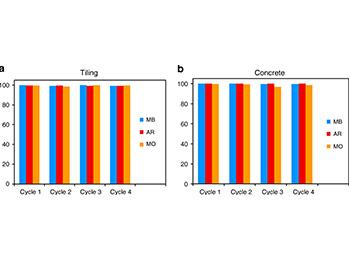
The invention presents a direct growth method of ZnO nanowires on civil engineering elements intended for photocatalysis for water and/or air depollution. Due to their high surface-to-volume ratio, ZnO nanowires showed excellent efficiency in the decomposition of tested dyes (AR14, MB, and MO) into less harmful products such as CO₂ , H₂O, NO³⁻, or SO₄²⁻ via a photocatalytic-induced mineralization process.
The civil engineering element coated with ZnO nanowires on its rough surface produced with this method can be integrated for instance in the development of the 5th-generation (5G) road, public garden, or in new buildings/houses. Smartly designed with new and possibly bio-based materials, 5th generation plans to make smarter roads in the near future will integrate numerous technologies including an environment depollution function. The photocatalysis process is a promising emerging solution for this aim, as it is a cheap and fast solution to degrade toxic organic compounds into harmless products. With the present invention, the photocatalysis process can be incorporated into our everyday life. Thus, incorporating metal oxide semiconductors (photocatalysts) onto civil engineering materials is a smart way to achieve this goal, as they are known to perform photocatalysis under ultraviolet lighting, or even under visible lighting with doped photocatalysts.

This software automatically detects chart elements (bars, axes, ticks, labels, legends, titles, slices, symbols, borders) from images and makes their content searchable and explorable via a voice and/or text assistant.

Electricity cost is one of the main expenses in water electrolysis, so improving conversion efficiency in electrolysers is crucial. Our innovative Anion Exchange Membrane (AEM) water electrolysis cathode catalyst rivals the efficiency of Carbon-Platinum (Pt/C) at a much lower cost. It combines nickel with a small amount of a Platinum Group Metal (PGM) through a unique one-step synthesis. In a three-electrode setup at 20°C and 0.1 mol/L KOH with a 10 mA/cm² current density, pure Ni stands at -280 mV overpotential, while our catalyst shows -110 mV, close to Pt/C 60%’s -105 mV, thus enhancing both affordability and performance in hydrogen production. At 1 mol/L KOH, our catalyst’s overpotential even drops to -65 mV, versus -50 mV for Pt/C 60%.
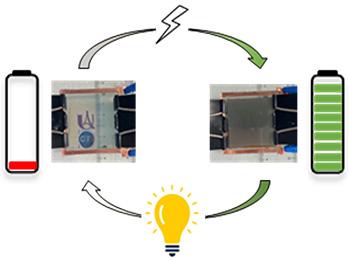
The development of bi-functional smart window, which combine reversible battery-type electrochemical energy storage and electrochromic properties, is an significant step forward to tackle the energetic footprint of buildings. These innovative aqueous based devices can reversibly switch from a transparent discharged state to a colored (even fully opaque) charged state. When integrated in “green” buildings, they efficently regulate light and heat transfer, thus
reducing the energy consumption and recycling stored energy. The selling point of our approach lies in leveraging Reversible Zinc Electrodeposition (RZE) on a transparent conductive oxide anode, with the possibility of combining various electrochromic materials at the cathode.
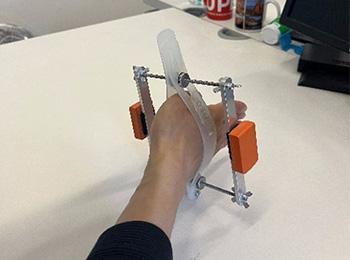
Neurological movement disorders disrupt the execution of alternating movements which are the basis of most daily movements. Among these disorders, Parkinson’s disease mainly affects large amplitude movements (hypometria). Because of the lack of tools allowing simple and rapid measurements of the different kinematic parameters of rapid alternating movements, the standard clinical examination of these movements cannot be achieved in a quantified manner. We will seek, by comparing a sample of healthy subjects and a sample of subjects with moderate Parkinson’s disease, the kinematic parameters of the movement (amplitude, speed, acceleration, fluidity) that are most discriminating compared to normal movement.
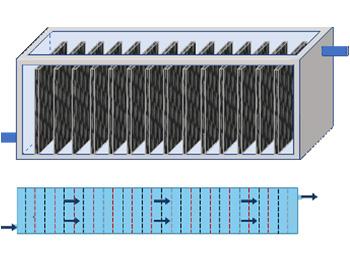
Biological treatments play a crucial role in removing organic and nitrogen compounds from wastewater with high cost-effectiveness. However, these technologies face limitations when dealing with industrial wasterwater containing biorecalcitrant organic compounds. This innovative anodic oxidation reactor tackles the issue by oxidizing the biorecalcitrant compounds, non selectively and transforming them into more biodegradable forms, to achieve a synergistic effect with a post-biological treatment. This combination of treatments aims at reaching high removal yields, for a wide range of industrial wastewaters with optimized energy consumption.